African Stories in Hull & East Yorkshire
  • Home
  • Project
    • Stories archive
    • Contemporary Voices
    • Schools
    • Gallery
    • Further information
  • Blog
  • What's New!
  • About
    • Events
    • Exhibitions
    • Get involved
    • Media coverage
    • Contributors
    • Referencing
  • Contact

Albert May

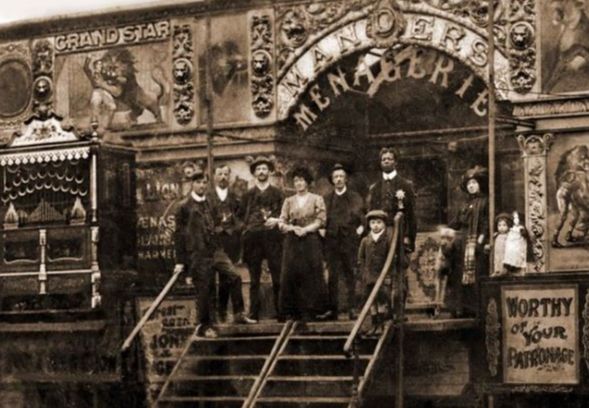
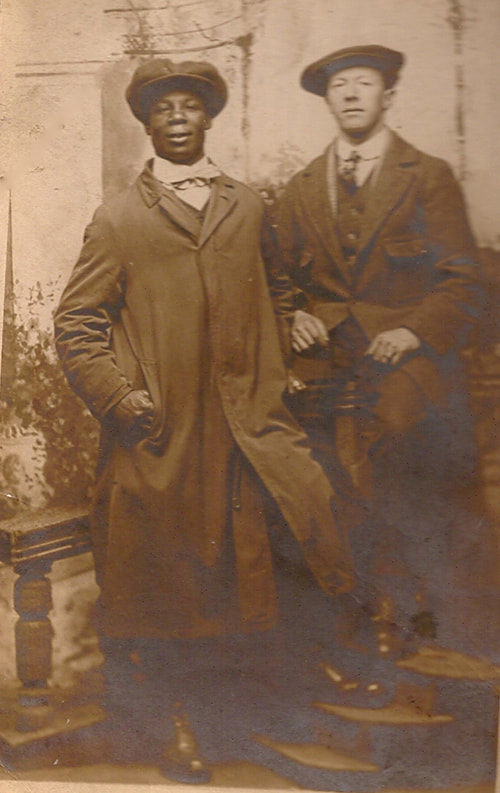
After reading our feature on Maccomo and the lion tamers, Martin Hale was astounded to recognise his grandfather in the header of the story. The striking photograph was taken in Hull around 1914 showing members of the Manders family with 'Black Joe'. We now know that 'Black Joe' was Albert May thanks to Martin's account below, which we're hugely grateful for.
Picture
Albert May (also known as Albert Williams, Albert Maccomo, Captain Maccomo, Maccona, and Albert Watson) was born in Spanish Town, Jamaica in 1877.
I know that he had siblings but I know nothing of them, or of his parents. From being a young boy, he worked on a sugar plantation owned by a family called May (hence Albert's surname), as he grew to a teenager he was cutting down the sugar cane in the fields. Despite the end of slavery in the British Empire in 1834 he was effectively "tied" with his family to accommodation and work on the plantation.
Aged 15 in 1892, he wanted something different and was given permission to leave the plantation, which he did, becoming a cabin boy on a ship bound for England; some adventure at that age in those days. I'm not sure if his plan was to try working passage on ships to see the world, however being badly treated on board he jumped ship when it docked in Liverpool. Albert was almost 6' tall and physically fit and strong.
With no job and little if any money, Albert wandered the streets and came upon a fairground which in those days featured a boxing booth. Albert being young and fit seized his chance and entered the ring, stopping "the professional" in the fight and thus earning himself his first job aged 15 on the English fairgrounds as a boxer. Not only could he box but the fact he was a good-looking Black man was an attraction in itself, when many parts of the country away from the major ports had never seen Black people. Albert boxed for a number of years and met Jack Johnson, then World Heavyweight Champion when he visited England in 1911. By now Albert was using the name Williams, rather than May.
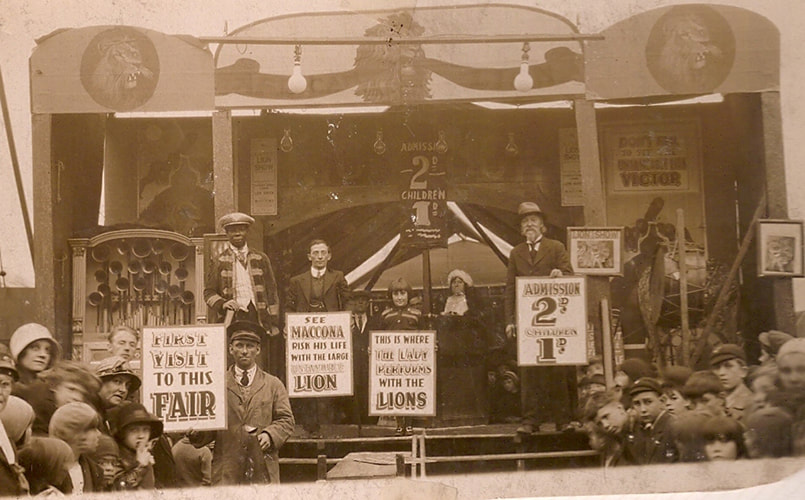
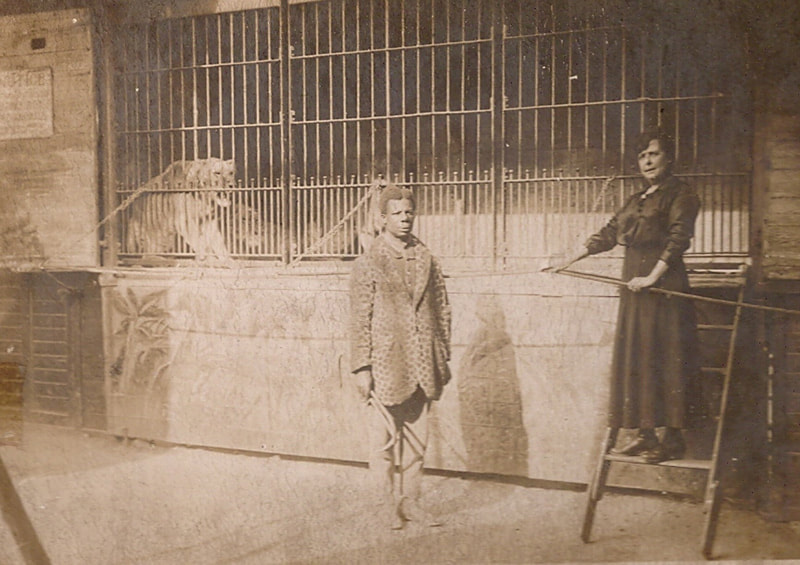
As Albert got older he moved from the boxing booth to the animal cages as "a lion trainer" working with "Buff Bill", Pat Collins and Mander's shows travelling across the Midlands and the North of England. He is mentioned in a number of books including the 1946 "I Was After Money" by Charles Hand, which describes one of the stunts where a barmaid enters the lion's cage with Albert.
Picture
Albert at a show front
Picture
Albert and lion
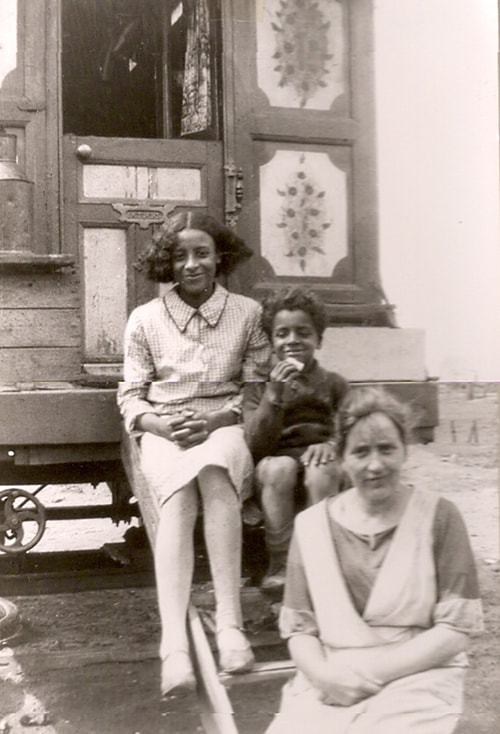
Albert met and married Mary Watson (1888 – 1953) a girl from the North East of England. They had a daughter Frances Hannah May (January 1918 – September 2013), a daughter Irene (1921 – 1923) and a son George Albert (March 1923 – February 1980).  The family wintered on various grounds but mainly on Bowling Fairground in Bradford; Frances was born in a house in Prospect Street in Bradford. Sometime after his son's birth, Albert for some reason changed his name again to that of his wife and became Albert Watson.
Picture
Mary, Frances and George in 1930
Picture
Albert Watson and brother-in-law
Being black in those days was not easy and Albert was a religious man who although obviously not educated could read and write; he insisted the family wore a clean white shirt or blouse every day to ensure they were never called "dirty".  Frances talked of there being only three black families in Bradford in those days and of how people in the 1920's would want to touch her skin to see if the colour came off! How times have changed.
​
She also talked of bottle feeding young lion cubs with milk in the small caravan that the family called home. Of course none of the lions in the shows were particularly dangerous, claws were filed, teeth were worn and generally the animals were old.  Or else the lions had been hand reared and were almost part of the family. Despite this it did not stop the occasional mishap when Albert would be badly clawed in the small travelling cage used in the shows. Hydrogen peroxide would be poured in and the wound left to heal.
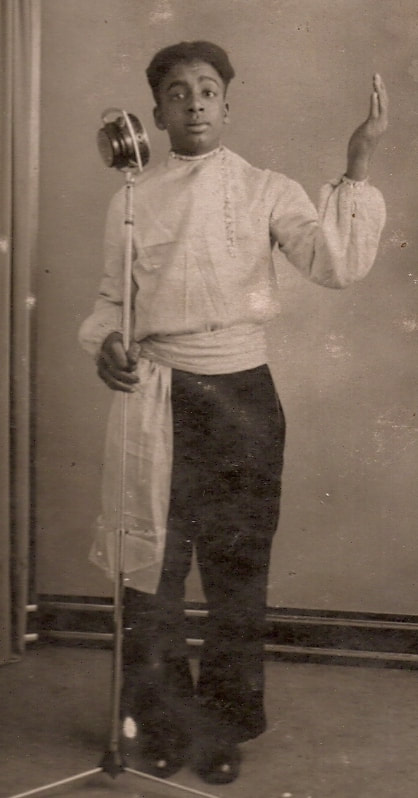
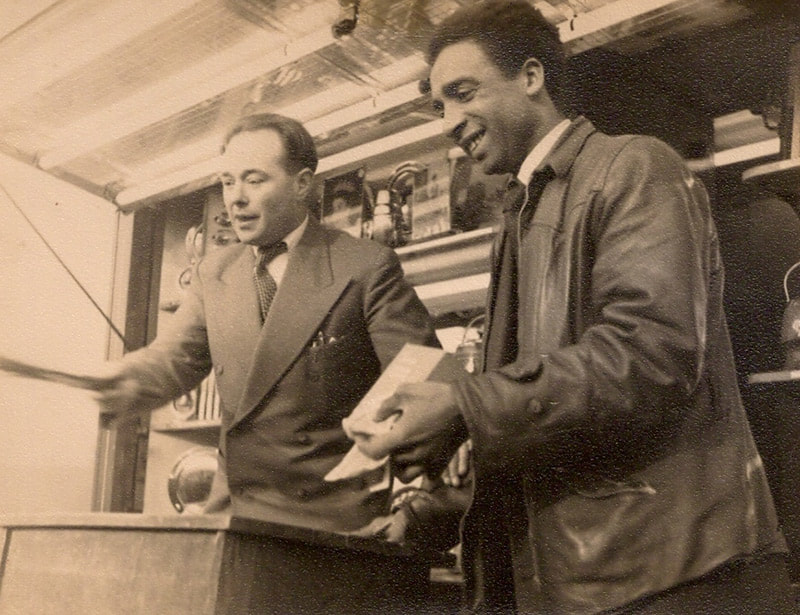
In the 1930s as Albert became older the family had a side stall on the fairs; George also sang and played drums in a group along with other showmen including Herbert Hale (November 1918 – September 2008), playing working men's clubs mainly in Yorkshire. Herbert had known Frances on the fairgrounds since being a child. By the late 1930's due to both her mother and father's ill health Frances was effectively the one looking after the family, who had now settled on Bradford Moor Fairground, with Frances working in a Bradford woollen mill. Of course travelling with the fairs, Frances, George and Herbert had little schooling (only September – March) yet all were avid readers, able to write and of course excellent with anything to do with handling money! Herbert in particular was exceptional with any mental arithmetic.
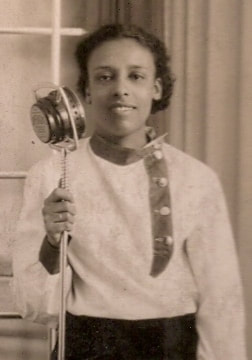
During the war Frances worked at Avro helping to build Lancaster bombers and continued her singing, even singing on the stage of London's Drury Lane Theatre to entertain troops.

Albert died in December 1942; George was fighting in WWII and was unable to return for the funeral. I believe Albert was buried in the then Undercliffe Cemetery in Bradford.
Picture
Frances Watson, 1937
Picture
George Watson, 1937
Picture
Herbert Hale and George Watson auctioneering
After Albert’s death
​
One of Albert's siblings in Jamaica had a son called Frank Dunkerley who came to England in the late 1940's/early 1950's and worked on the London Underground, until he retired in the 1970's and returned to Jamaica, where he died a few years later. He had been married but had no children. Another of Frances' cousins Vera Lingo also lived in London in the 1970's; she had a son.
After the war Herbert and George worked fairs and markets together.  With much success they also opened a number of fancy goods shops around Bradford in the 1950's before starting to manufacture and wholesale to market traders, which carried on until George's death in 1980.  For a few years after the war, along with Frances they also performed as "The Romany Seven" in working men's clubs around Yorkshire.
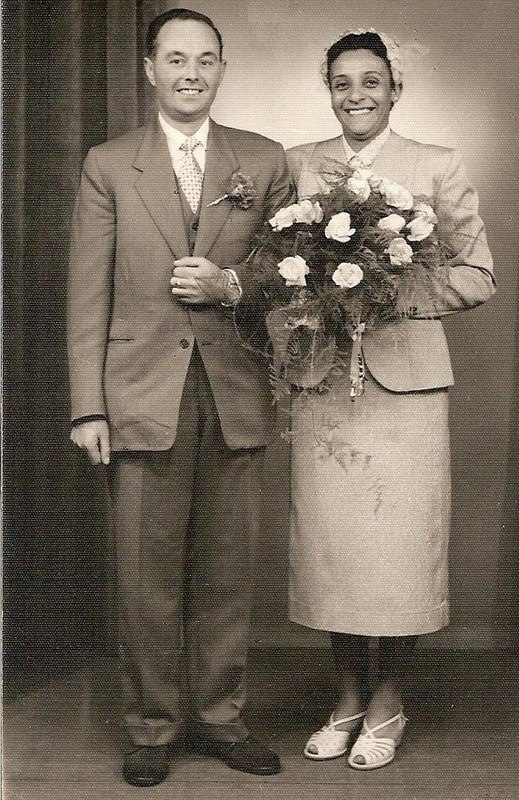
Herbert and Frances were married on 22nd June 1955 and had a son Martin (1956 - ). They lived at Dudley Hill, Bradford for many years before moving to Scarcroft near Leeds and finally to Weybridge in Surrey in 2000, where they spent their final years.
Picture
Herbert Hale and Frances Watson on their wedding day, 1955
Picture
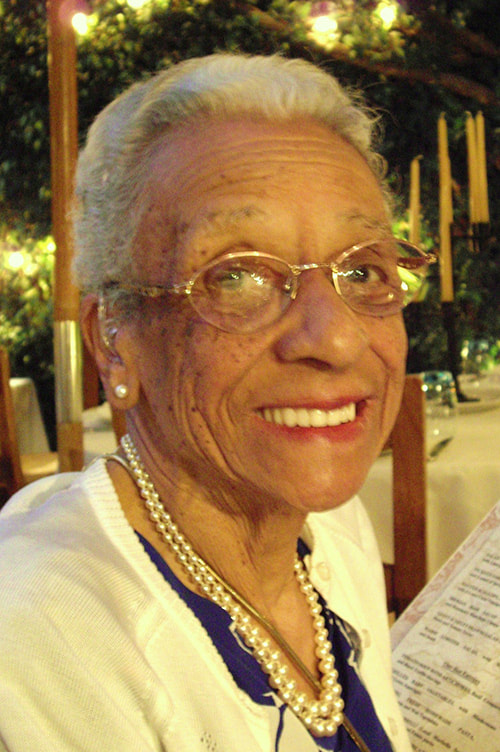
Frances in 2010, age 92
George married Pauline Newell shortly afterward and had a son Paul (1958 - ). They lived at Bankfoot in Bradford.
Herbert's father George Hale was a well-known Yorkshire showmen and was known to generations of Bradfordians as "Father Christmas" who stood at the bottom of the old Kirkgate Market steps in Bradford for many years. Herbert's brother John was a promoter of fairs around Bradford and a supplier of novelties to fairground and seaside stall holders.
​Albert’s grandsons and great-granddaughter
Paul Watson trained as a mechanic and for a number of years had his own garage at Dudley Hill, Bradford.  Lives in Bradford, never married.
Martin Hale was the first in either the Hale or Watson family to graduate university; he went into business and worked as Sales Director for a number of global manufacturers supplying major multiple retailers across Europe with consumer goods. He married Giovanna, a teacher in 1980 and moved from Bradford to Weybridge in 1987 where they still live.
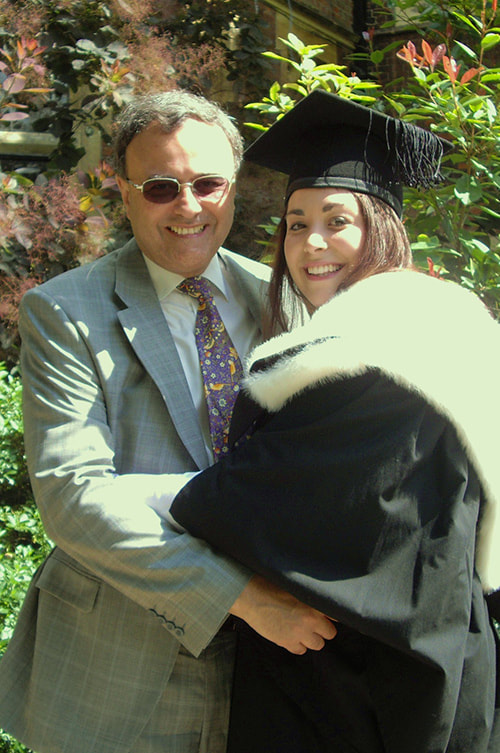
Martin’s daughter Jennie Hale (1989 - ) studied at Cambridge University 2007 – 2011 and her grandmother Frances very proudly attended her graduation in June 2011.  Having lived and worked for a short time in Paris, Jennie is now working in London; I know Albert would have been very proud of her achievements.​

Article written by Martin Hale, October 2018.
Black lion tamers
Read the story that inspired Martin to get in touch, about Black lion tamers in Hull and East Yorkshire.
About the lion tamers >>
Picture
Martin and Jennie on her graduation day, 2011
​All work (and images) published on African Stories in Hull and East Yorkshire is the intellectual property of its creators and requires permission to be republished or reproduced.

If you wish to use any of the images on our website, please submit an enquiry via the Contact page.
​
Stories
Contemporary Voices
Blog
What's New!


Schools
Get involved
Media coverage
Events
About
​Meet the team
Referencing
Contact
© Copyright 2026 African Stories in Hull and East Yorkshire.
  • Home
  • Project
    • Stories archive
    • Contemporary Voices
    • Schools
    • Gallery
    • Further information
  • Blog
  • What's New!
  • About
    • Events
    • Exhibitions
    • Get involved
    • Media coverage
    • Contributors
    • Referencing
  • Contact